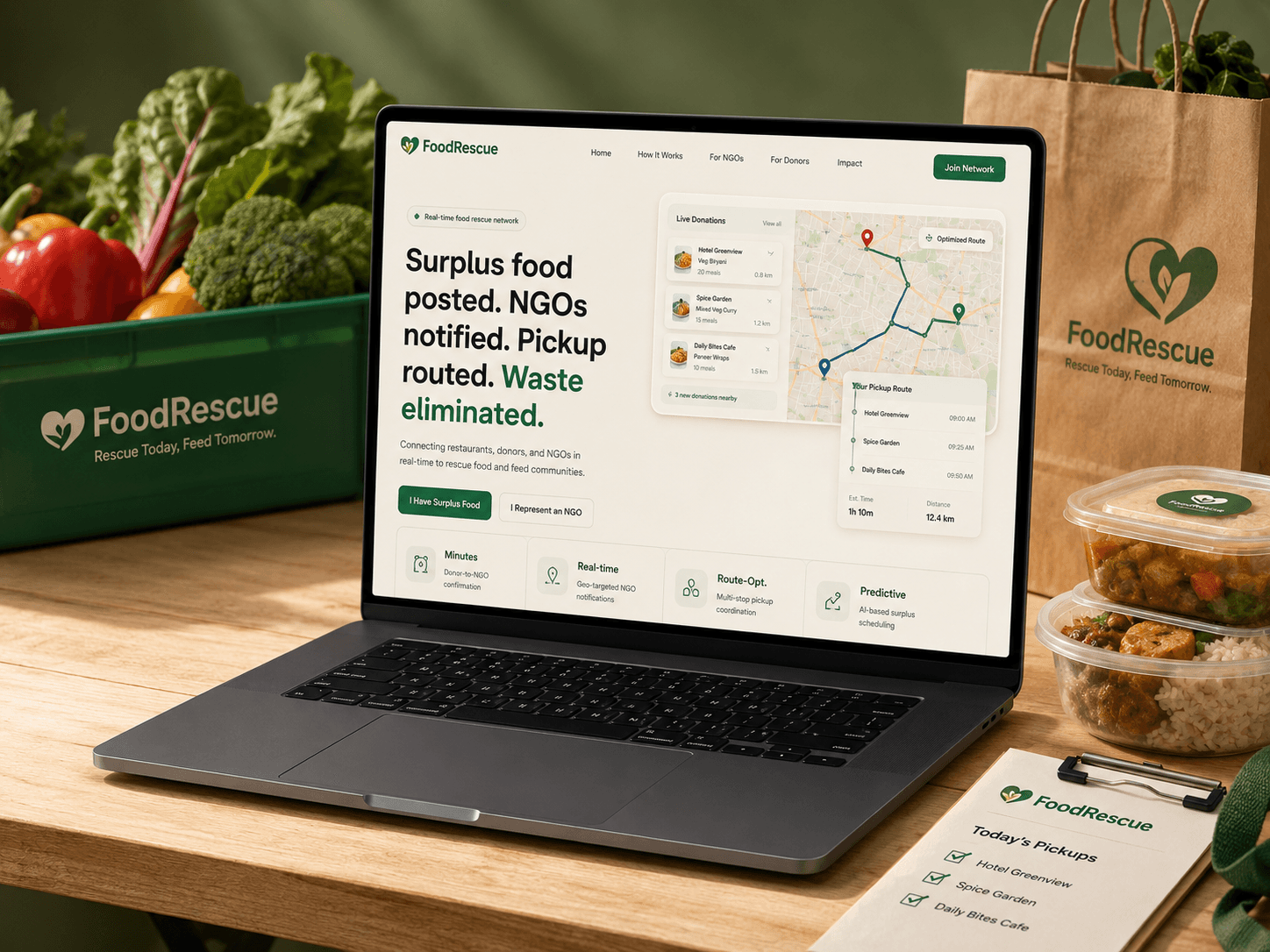
Surplusfoodposted.NGOsnotified.Pickuprouted.Wasteeliminated.
Surplus food was going to waste because donors and NGOs couldn't coordinate in real time.
Restaurants and households with surplus food had no reliable way to alert nearby NGOs before the food spoiled. Existing donation processes required phone calls, WhatsApp messages, and manual coordination — by the time an NGO confirmed availability and arranged pickup, the food was often no longer safe to distribute. NGOs wasted hours tracking down viable donations instead of focusing on distribution. The result was avoidable food waste alongside unsatisfied demand from shelters that needed it.
Geo-targeted instant alerts with route-optimized multi-pickup coordination.
Built a two-sided platform: donors post surplus food with type, quantity, pickup window, and GPS location — the post goes live immediately. Nearby NGOs and volunteers receive instant push notifications filtered by distance and food type. Volunteers can claim a pickup from their phone, and the system generates a Google Maps-optimized route if they have multiple pickups in the same window. An AI trend module analyzes historical donation patterns to help restaurants predict surplus in advance and pre-schedule NGO pickups, reducing same-day coordination overhead. Impact tracking gives donors a feed of where their food went.
“Replacing WhatsApp coordination chains with instant geo-targeted alerts and route optimization collapsed the time between surplus food available and NGO pickup confirmed from hours to minutes.”
Engineering Core Principle